
STUDIES OF THE WEAI BOOK SERIES Robert Stolz (Duke University Press, 2014) For information from the publisher, please click here. Bad Water is a sophisticated theoretical analysis of Japanese thinkers and activists' efforts to reintegrate the natural environment into Japan's social and political thought in the late nineteenth century and early twentieth. The need to … [Read more...]
Taming Tibet: Landscape Transformation and the Gift of Chinese Development
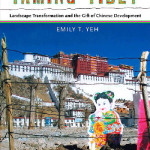
STUDIES OF THE WEAI BOOK SERIES Emily T. Yeh (Cornell University Press, 2013) For information from the publisher, please click here. Winner, E. Gene Smith Book Prize on Inner Asia, Association for Asian Studies The violent protests in Lhasa in 2008 against Chinese rule were met by disbelief and anger on the part of Chinese citizens and state authorities, … [Read more...]
From Cultures of War to Cultures of Peace: War and Peace Museums in Japan, China, and South Korea
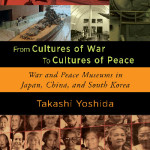
STUDIES OF THE WEAI BOOK SERIES Takashi Yoshida (MerwinAsia, 2013) For information from the publisher, please click here. Takashi Yoshida examines historical analysis of war and peace museums from the late nineteenth century to the present and traces the historical development of a pacifist discourse in postwar Japan that centered on Japan’s war crimes and … [Read more...]
Public Properties: Museums in Imperial Japan
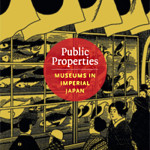
STUDIES OF THE WEAI BOOK SERIES Noriko Aso (Duke University Press, 2013) For information from the publisher, please click here. In the late nineteenth century, Japan's new Meiji government established museums to showcase a national aesthetic heritage. Inspired by Western museums and expositions, these institutions were introduced by government officials hoping to … [Read more...]
The Nature of the Beasts: Empire and Exhibition at the Tokyo Imperial Zoo
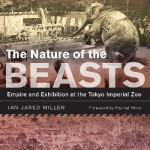
STUDIES OF THE WEAI BOOK SERIES Ian Jared Miller (University of California Press, 2013) For information from the publisher, please click here. It is widely known that such Western institutions as the museum, the university, and the penitentiary shaped Japan’s emergence as a modern nation-state. Less commonly recognized is the role played by the distinctly hybrid … [Read more...]
