
STUDIES OF THE WEAI BOOK SERIES Margaret Mih Tillman (Columbia University Press, 2018) For information from the publisher, please click here. A widespread conviction in the need to rescue China’s children took hold in the early twentieth century. Amid political upheaval and natural disasters, neglected or abandoned children became a humanitarian focal point for … [Read more...]
A Misunderstood Friendship: Mao Zedong, Kim Il-sung, and Sino–North Korean Relations, 1949–1976
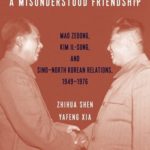
STUDIES OF THE WEAI BOOK SERIES Zhihua Shen and Yafeng Xia (Columbia University Press, 2018) For information from the publisher, please click here. Today, the People’s Republic of China is North Korea’s only ally on the world stage, a tightly knit relationship that goes back decades. Both countries portray their partnership as one of “brotherly affection” based on … [Read more...]
Japan’s Imperial Underworlds: Intimate Encounters at the Borders of Empire

STUDIES OF THE WEAI BOOK SERIES David R. Ambaras (Cambridge University Press, 2018) For information from the publisher, please click here. This major new study uses vivid accounts of encounters between Chinese and Japanese people living at the margins of empire to elucidate Sino-Japanese relations in the nineteenth and early twentieth centuries. Each chapter … [Read more...]
Idly Scribbling Rhymers: Poetry, Print, and Community in Nineteenth-Century Japan

STUDIES OF THE WEAI BOOK SERIES Robert Tuck (Columbia University Press, 2018) For information from the publisher, please click here. How can literary forms fashion a nation? Though genres such as the novel and newspaper have been credited with shaping a national imagination and a sense of community, during the rapid modernization of the Meiji period, Japanese … [Read more...]
Buddhas and Ancestors: Religion and Wealth in Fourteenth-Century Korea
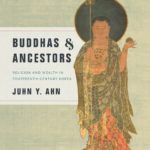
STUDIES OF THE WEAI BOOK SERIES Juhn Y. Ahn (University of Washington Press, 2018) For information from the publisher, please click here. Two issues central to the transition from the Koryo to the Choson dynasty in fourteenth-century Korea were social differences in ruling elites and the decline of Buddhism, which had been the state religion. In this revisionist … [Read more...]
