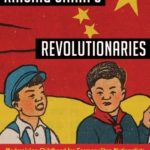
STUDIES OF THE WEAI BOOK SERIES Margaret Mih Tillman (Columbia University Press, 2018) For information from the publisher, please click here. A widespread conviction in the need to rescue China’s children took hold in the early twentieth century. Amid political upheaval and natural disasters, neglected or abandoned children became a humanitarian focal point for … [Read more...]
A Misunderstood Friendship: Mao Zedong, Kim Il-sung, and Sino–North Korean Relations, 1949–1976
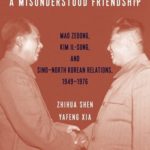
STUDIES OF THE WEAI BOOK SERIES Zhihua Shen and Yafeng Xia (Columbia University Press, 2018) For information from the publisher, please click here. Today, the People’s Republic of China is North Korea’s only ally on the world stage, a tightly knit relationship that goes back decades. Both countries portray their partnership as one of “brotherly affection” based on … [Read more...]
Uneven Moments: Reflections on Japan’s Modern History

ASIA PERSPECTIVES: NEW HORIZONS IN ASIAN HISTORY, SOCIETY, AND CULTURE Harry Harootunian Uneven Moments: Reflections on Japan's Modern History (2019) "A leading voice in Japanese intellectual history, it is no exaggeration to say that Harry Harootunian’s work has shaped the field for the past forty years. These essays collectively provide an extended reflection on the … [Read more...]
The Other Milk: Reinventing Soy in Republican China
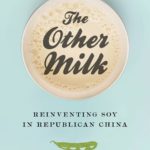
STUDIES OF THE WEAI BOOK SERIES Jia-Chen Fu (University of Washington Press, 2018) For information from the publisher, please click here. In the early twentieth century, China was stigmatized as the "Land of Famine." Meanwhile in Europe and the United States, scientists and industrialists seized upon the soybean as a miracle plant that could help build modern … [Read more...]
Forging the Golden Urn: The Qing Empire and the Politics of Reincarnation in Tibet
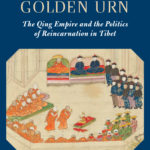
STUDIES OF THE WEAI BOOK SERIES Max Oidtmann (Columbia University Press, 2018) For information from the publisher, please click here. In 1995, the People’s Republic of China resurrected a Qing-era law mandating that the reincarnations of prominent Tibetan Buddhist monks be identified by drawing lots from a golden urn. The Chinese Communist Party hoped to limit the … [Read more...]
